Begin the lesson
A doorway into Indian Philosophy, Ramayana, Mahabharata & Gita
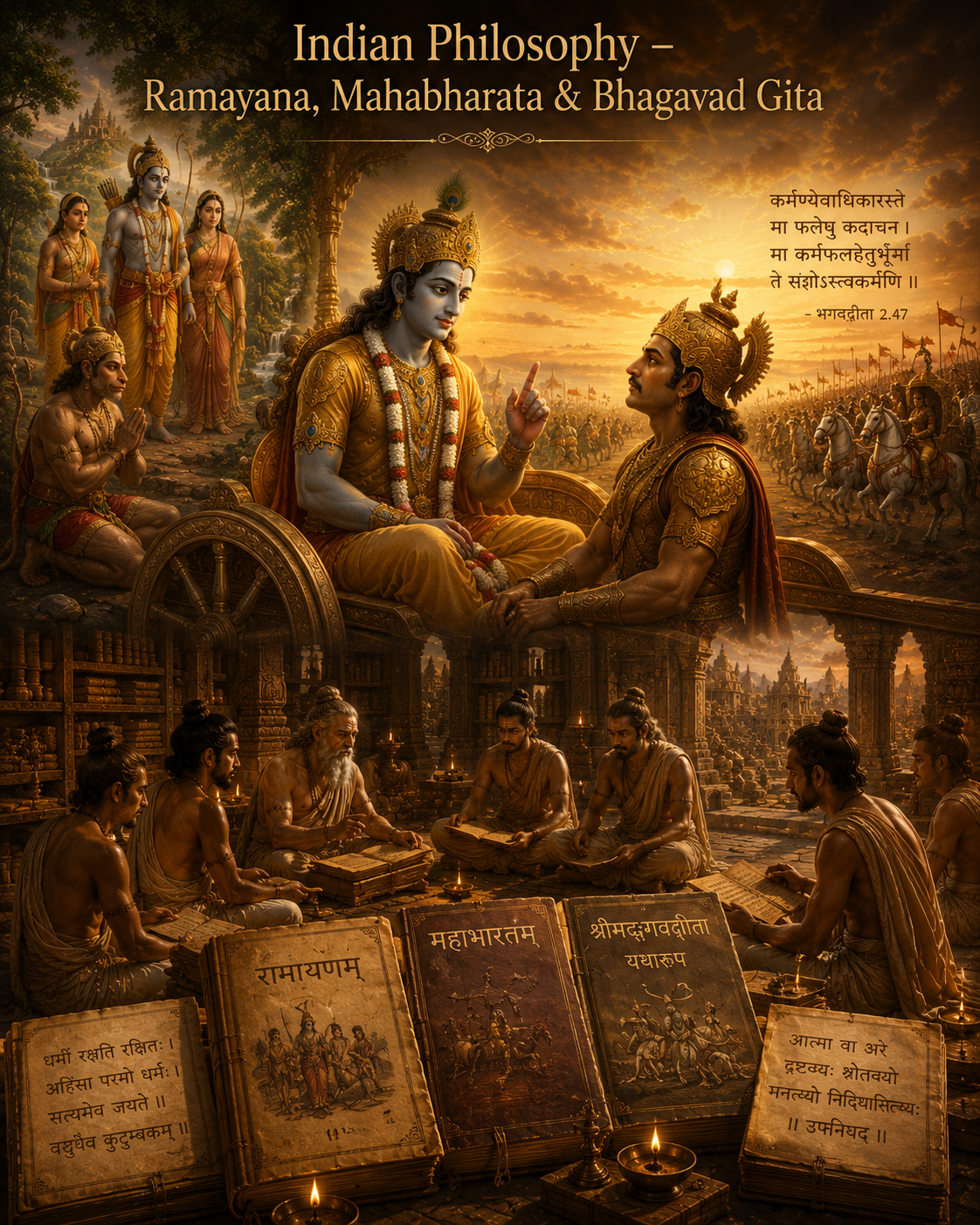
The Indian Philosophy paper reads the Mahabharata, Ramayana, and Bhagavad Gita as philosophical literature, not only heroic story. It highlights Dharma in conflict, contextual righteousness, fate and free will, ideal conduct, sacrifice, responsibility, and spiritual action.
The Mahabharata explores ethical dilemmas through Yudhishthira, Arjuna, Bhishma, and the crisis of duty. The Ramayana presents Rama, Sita, and social responsibility through ideals and tensions. The Gita gives a compact philosophy of action, devotion, knowledge, discipline, and liberation.
This path invites readers to see narrative as a teaching method: philosophy made memorable through characters, choices, and consequences.
Historical traditions contain documented achievements, philosophical interpretation, symbolic literature, and debated claims. This path labels those layers clearly and encourages further reading.
Research basis: Indian education domains and principles taught at ancient universities like Taxila and Nalanda.