Begin the lesson
A doorway into Vedas & Upanishads
The source paper introduces the Rigveda, Yajurveda, Samaveda, and Atharvaveda as layered collections of hymns, ritual formulas, melodic chants, healing concerns, cosmology, and everyday life. The Upanishads then open a philosophical inquiry into Atman, Brahman, action, liberation, and reality.
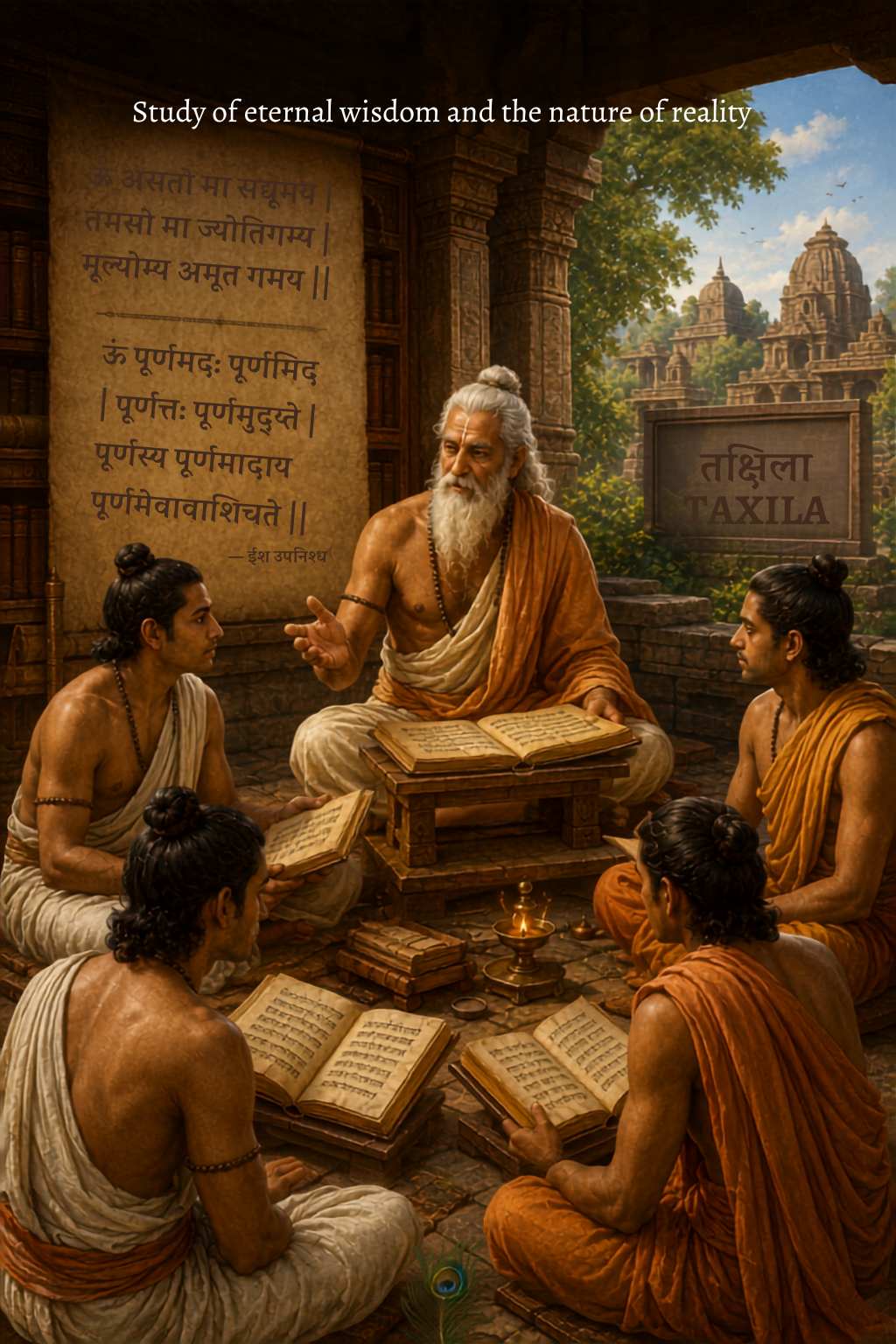
Taxila emphasized recitation, ritual training, grammar, phonetics, astronomy, metrics, etymology, and ritual geometry. Nalanda, though primarily Buddhist, preserved and compared Vedic materials alongside Buddhist philosophy and logic.
This path treats the texts as living intellectual archives: oral discipline, sacred poetry, ritual science, and philosophical questioning woven together.
Historical traditions contain documented achievements, philosophical interpretation, symbolic literature, and debated claims. This path labels those layers clearly and encourages further reading.
Research basis: Indian education domains and principles taught at ancient universities like Taxila and Nalanda.